Dynamic Currency Conversion (DCC) review: never worth it
The rare travel-money question with a one-word answer: decline. When a terminal or ATM abroad offers to charge you in your home currency, it's applying a conversion markup that benefits the merchant's side of the transaction — a point consumer authorities and card networks have made publicly for years. Always choose the local currency. There is no trip where the other button wins.
What we like
- The defense costs nothing and requires no product, app, or signup
- One habit — always pick local currency — covers card terminals and ATMs alike
- The consensus against DCC is public and boring: consumer bodies and card networks agree
Flaws but not dealbreakers
- The prompt is engineered to make the bad choice feel safe — 'your' currency reads as the careful option
- Screen wording varies endlessly, so you have to recognize the trick, not memorize a phrase
- ATMs are the highest-stakes version, and the decline button is often styled to look alarming
- Tired, jet-lagged, at a checkout queue is exactly when the trap is sprung
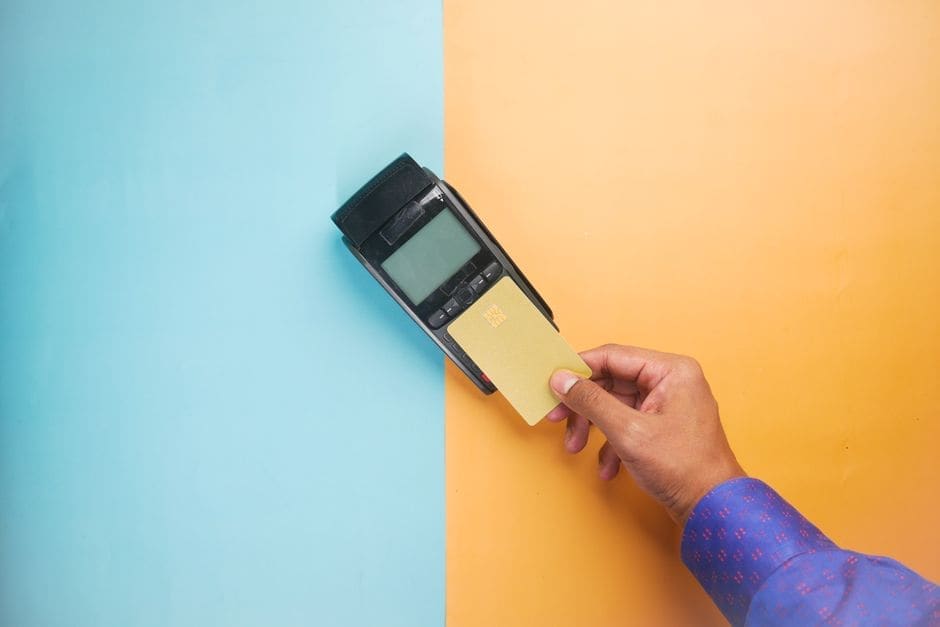
Somewhere on your next trip, a card machine will ask a question that sounds like a courtesy: would you like to pay in your home currency instead of the local one? It's called dynamic currency conversion, and it is not a courtesy — it's an on-the-spot exchange performed at a marked-up rate, with the margin flowing to the merchant's side of the transaction rather than to you. Your own card network converts at rates that are almost invariably better. This isn't a contested claim; consumer protection bodies and the card networks themselves have said as much publicly for years.
The trap works because the framing inverts the truth. 'Pay in your own currency' sounds like the prudent choice — a known number, no surprises — while the local-currency option feels like a leap. In reality the 'known number' is known precisely because the unfavorable conversion has already been baked into it, and the 'uncertain' local amount resolves through your bank at a better rate. ATMs run the same play with higher stakes, sometimes styling the decline option — 'without conversion' — to look like a mistake. It isn't. It's the correct button.
We ran the same rubric across the category in Travel Fees, Ranked: What Buys Something and What's Pure Margin if you want the comparison.
Knowing where the offer appears is most of the defence, because it never announces itself as a fee. At a card terminal it looks like a helpful question: pay in your home currency or theirs. At an ATM it is a screen offering a guaranteed rate with a number attached, and the guarantee is real — the rate is simply worse than the one you would have got. Online, it can be a pre-ticked box at checkout on a foreign site. In every version, the option presented as convenient is the expensive one, and the plain-looking option is the correct one.
It is worth understanding why this exists at all, because it explains why it will not go away. The conversion is performed by the merchant's payment processor rather than by your card network, and the margin built into that rate is shared between the processor and the business offering it. That is why a cashier may genuinely encourage you to accept, and why some terminals make declining slightly awkward — the person in front of you is not scamming you, they are following a screen designed by somebody who profits from your yes.
There is one situation where accepting looks tempting and still is not: when the exchange rate has been moving sharply and the home-currency figure feels like certainty. It is certainty — at a rate chosen by the party offering it, which is why they are offering it. Currency movement between the moment you tap and the moment the transaction settles is normally trivial, and it cuts both ways. Paying a fixed margin to avoid a random fraction of a percent is a bad trade even when the number on the screen is soothing.
So the rule travels light: local currency, every time, at every terminal, ATM, and online checkout that offers the choice — and if a machine converts without clearly asking, you're generally entitled to ask the merchant to void and rerun the charge. Note what this rule doesn't cover: your own bank's foreign transaction fees are a separate matter between you and your bank, worth checking in your account terms before a trip. DCC is simpler than all of that. It's the one travel-money question with no 'it depends': decline it, always.
Key specs
- Type
- Fee trap — payment terminals and ATMs abroad
- The rule
- Always pay in the local currency of the country you're in
- Applies to
- Card terminals, ATMs, and online checkouts showing your home currency